Blog

Stay up to date
Subscribe to the blog for the latest updates


There’s no single benchmark for ROI on a ServiceNow platform investment.
But several case studies demonstrate the range of outcomes organizations might expect from successful platform implementation:
These benchmarks demonstrate the huge potential upside for ServiceNow implementations.
But they also reveal something important: Returns vary dramatically based on implementation quality, user adoption, and how organizations leverage the platform's capabilities.
Despite ServiceNow's proven ROI potential, many organizations struggle to fully realize it.
It’s not entirely surprising, given that a WalkMe study recently found that enterprises wasted $104 million in 2024 on underused technology.
This value realization gap stems from several common challenges:
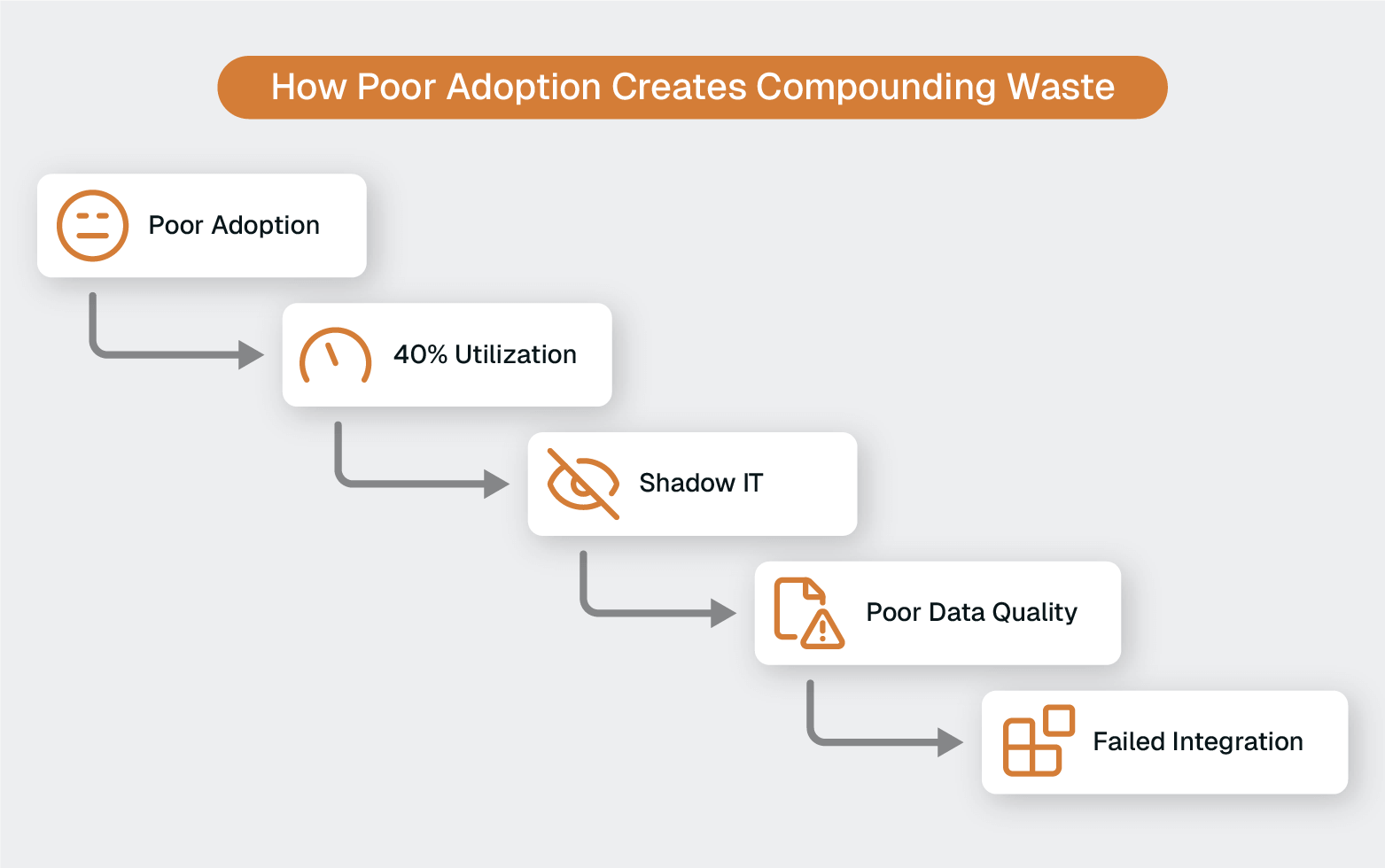
The value realization gap often exists because organizations focus on implementation (going live on time and budget) rather than adoption and optimization (ensuring people actually use the platform effectively and leverage its full capabilities).
Organizations that shift focus from implementation metrics to value realization metrics close the gap, transforming ServiceNow from an expensive ITSM tool into a strategic platform that drives operational excellence, cost reduction, and competitive advantage.
Maximizing ServiceNow ROI is a function of value divided by cost.
Since the cost of the platform is relatively static, we need to look at how we can either directly increase the value the platform provides or use its capabilities to reduce costs in other ways, improving net ROI for the organization.
We can break this down into three overarching goals:
The following six strategies address the root causes of the value realization gap, providing actionable approaches to increase ServiceNow ROI from baseline to exceptional. Each strategy includes specific implementation tactics, real-world results, and quantified ROI impact.
Organizations that successfully shift support volume from agent-handled incidents to self-service channels can deflect upwards of 50% of IT Help Desk requests.
This shift could reduce total IT support spend by as much as 30%, representing an enormous potential improvement in ROI on ServiceNow investment.
The ServiceNow Virtual Agent is the lever for increasing self-service IT requests.
But many companies struggle to achieve high deflection via the Virtual Agent because they’re missing the underlying data that the agent relies upon to be effective.
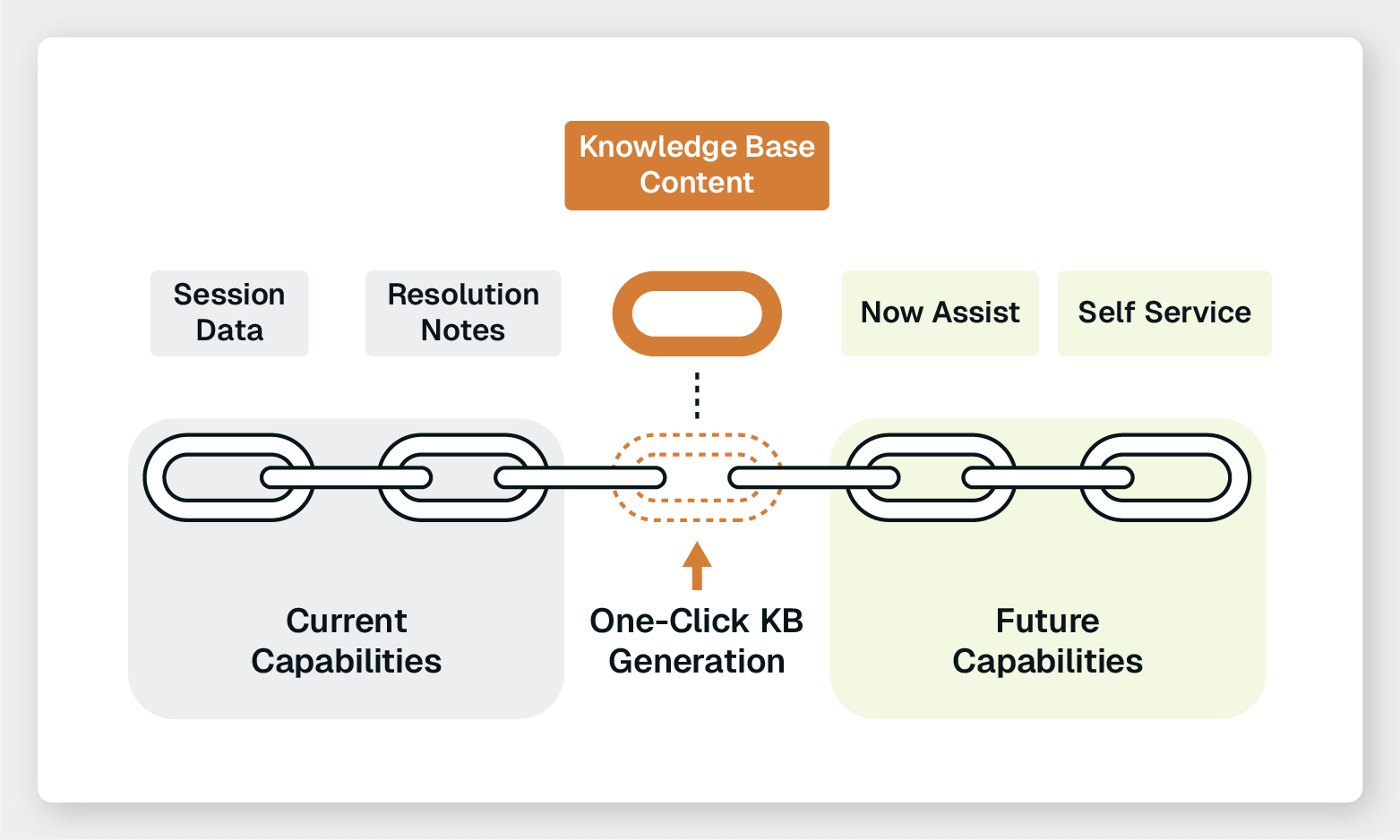
Virtual Agent draws from the knowledge base content. So if this content contains major gaps, you’ll struggle to get end users to adopt self-service support options.
Again, ServiceNow provides a clear solution here. Now Assist can automatically generate KB articles with a single click, directly from any resolved incident record.
But, for those KB articles to be helpful, the incidents must contain robust details about the problem, context, troubleshooting, and resolution.
In other words, a note saying, “Done,” won’t cut it.
So, increasing self-service support and reducing IT support costs ultimately comes down to two key action items:
With a 5X uptick in KB content, Virtual Agent will quickly become much more accurate and helpful. End users can more easily solve their issues, which can reduce overall IT support incidents and associated costs.
Organizations spend approximately $4,000 per employee annually on SaaS tools, with 30–38% of that investment wasted through unused licenses and duplicated applications, according to Zylo's SaaS management research.
Every redundant tool in your IT ecosystem represents wasted spend and reduced ServiceNow ROI.
When employees bypass ServiceNow to use unauthorized applications for collaboration, remote support, asset tracking, or request management, they create shadow IT that duplicates functionality you've already purchased, fragments data, and undermines platform ROI.
Action items:
Tool consolidation can also improve ServiceNow utilization rates. When employees can accomplish all tasks within ServiceNow rather than switching to alternative tools, platform adoption increases, multiplying the value extracted from your existing licensing investment.
For a 50-person support team spending 30 minutes per day on manual documentation, automation saves 750 agent hours monthly. That’s equivalent to 4.5 FTE positions, representing upwards of $324,000 annually.
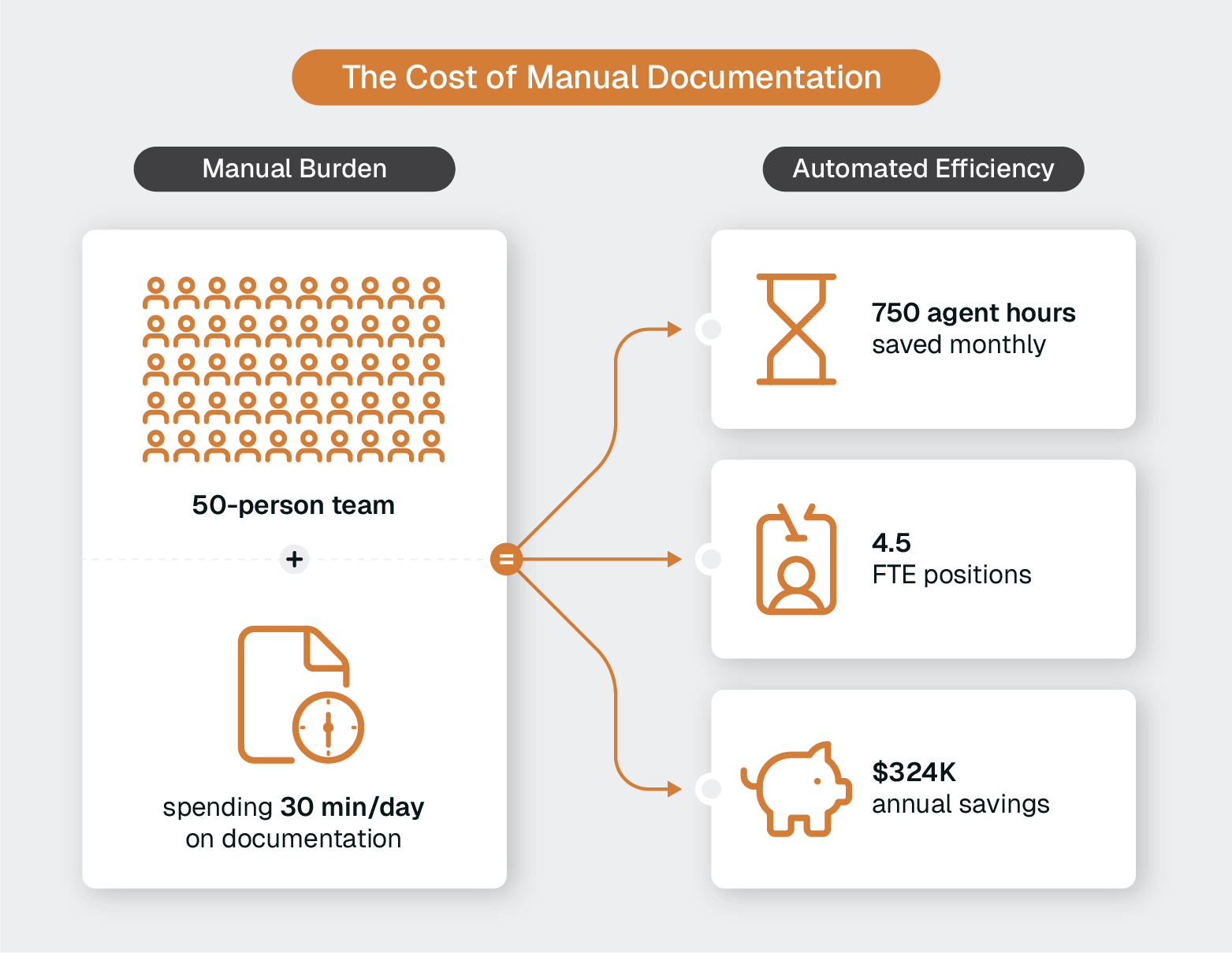
Additionally, the improved knowledge base drives deflection savings calculated in Strategy 1, creating a compound ROI that extends far beyond documentation efficiency alone.
Organizations recognize that comprehensive, searchable knowledge bases drive Virtual Agent deflection, enable self-service success, and reduce support volume.
But they struggle to maintain current, high-quality content because documentation competes with support delivery for agent time.
Action items:
For organizations handling 10,000 monthly incidents with a 45-minute average handle time, reducing handle time and MTTR by 38% saves 2,850 agent hours monthly or $1.23M annually in fully loaded expenses.
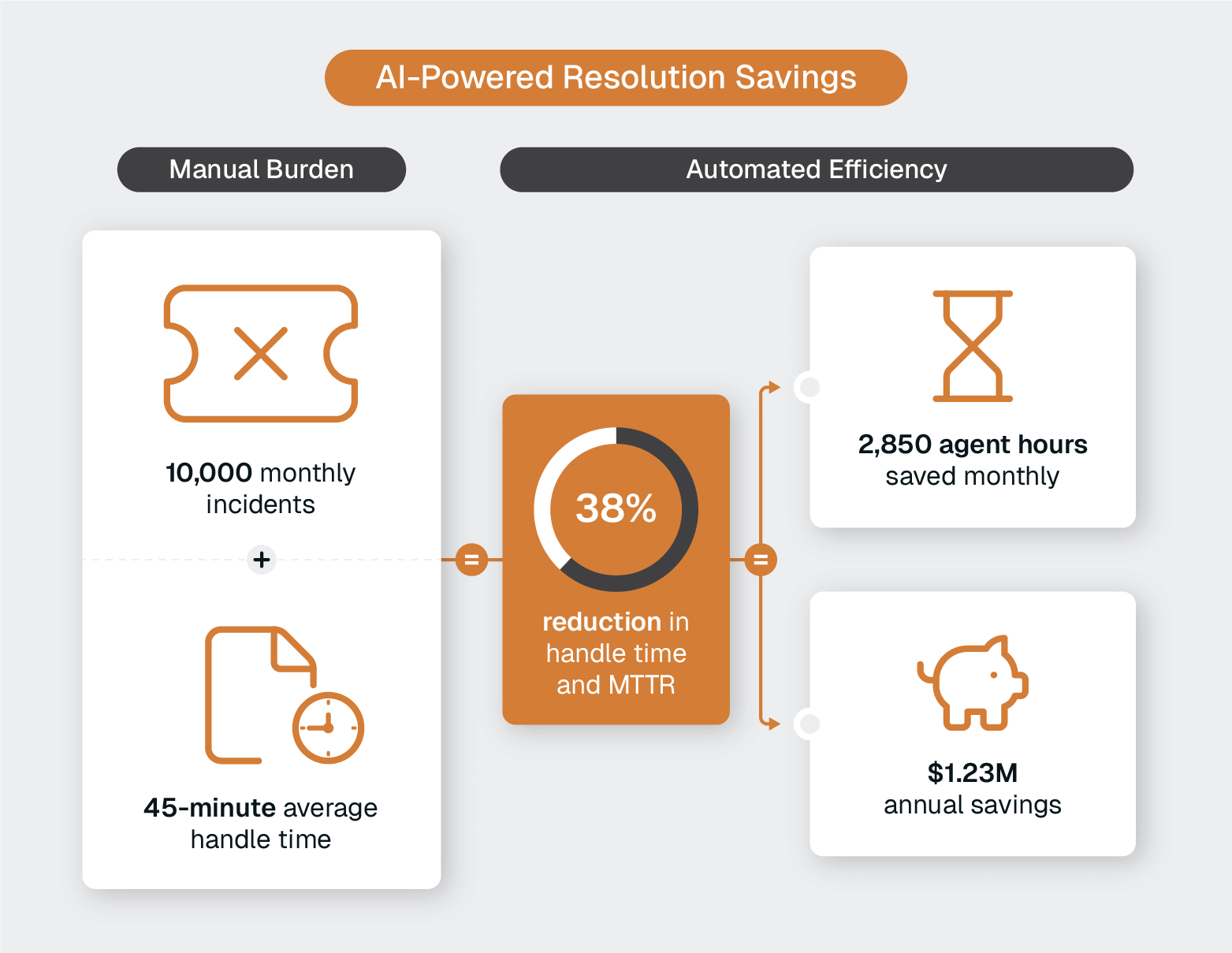
Additionally, improved first-call resolution (FCR) rates reduce repeat incidents and escalations, compounding the efficiency gains.
ServiceNow's AI capabilities, particularly Now Assist, and platform-integrated AI solutions like ScreenMeet’s Agent Assist provide the firepower your agents need to resolve issues faster and more fully.
Best of all, these two capabilities work together to improve agent efficiency and also power future self-service adoption.
Organizations implementing AI-enhanced support with quality training data achieve 25–35% improvement in FCR and 30%+ reduction in mean time to resolution (MTTR).
Organizations that limit ServiceNow to IT service management miss significant ROI opportunities.
Expanding ServiceNow to HR Service Delivery alone can generate 259% ROI with under six-month payback and, for organizations with 5,000 employees, shows an average benefit of $15.61 million over three years, according to a Forrest Total Economic Impact study.
Additional departmental expansions compound these returns through shared infrastructure and cross-functional automation that creates value impossible with disconnected systems.
ServiceNow's platform architecture enables enterprise-wide service delivery across HR, customer service, facilities, legal, finance, and other departments, creating economies of scale that multiply platform value while reducing per-department costs.
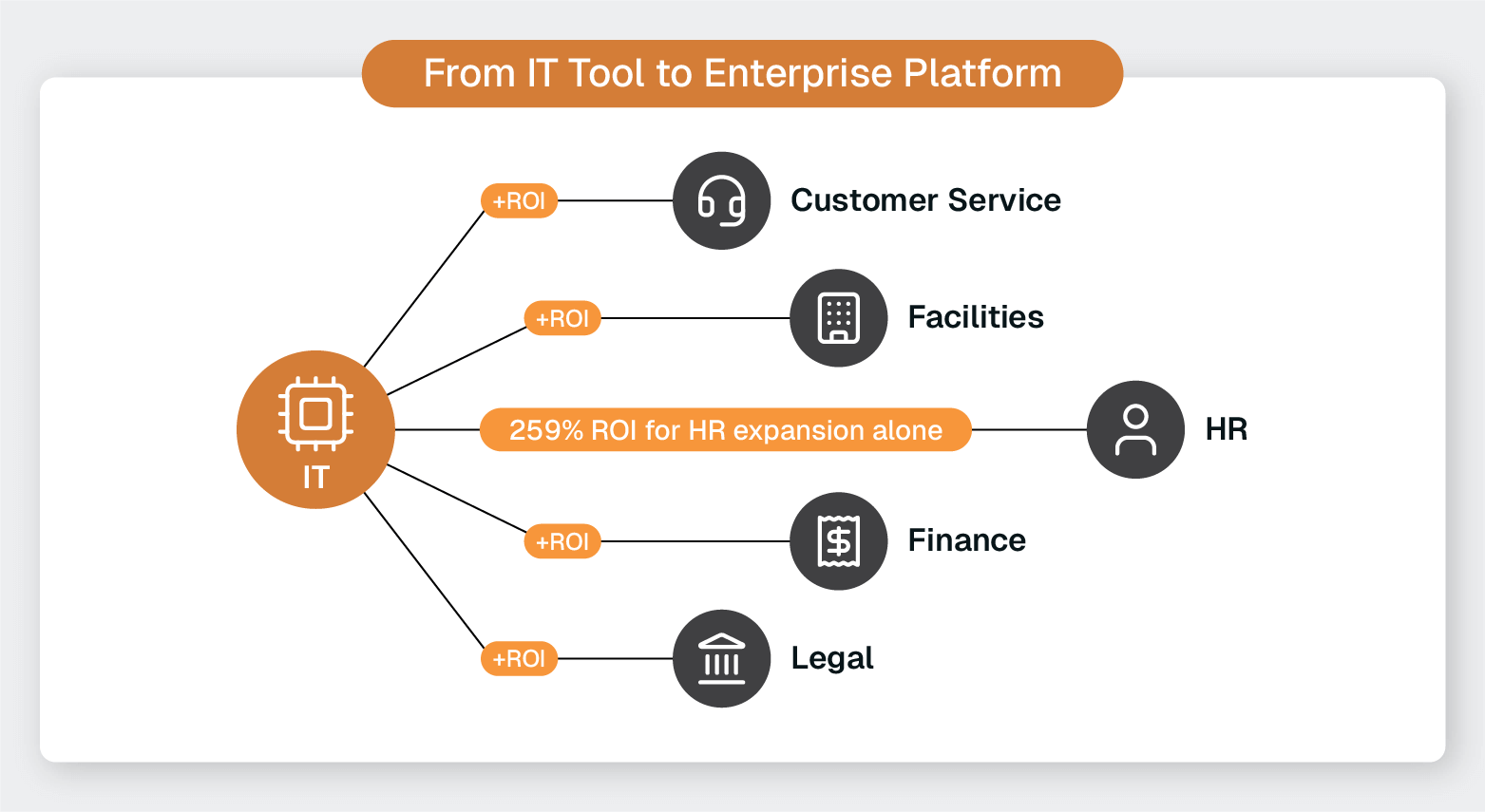
Expanding ServiceNow beyond IT transforms it from a departmental tool into a strategic enterprise platform, dramatically improving ROI through shared infrastructure, unified workflows, and cross-functional automation.
Action items:
ServiceNow ROI is an ongoing result of continuous measurement, analysis, and refinement.
Organizations that treat ServiceNow as "done" after implementation watch ROI degrade over time as workflows become outdated, adoption stagnates, and new capabilities go unused.
Those that implement systematic optimization see compound improvements that accelerate ROI year over year.
ServiceNow evolves rapidly with quarterly releases introducing new AI capabilities, workflow features, and integration options. User needs change as business priorities shift. Workflows that performed well at launch may no longer match current processes. Without continuous optimization, platform value erodes even as licensing costs remain constant.
ServiceNow Performance Analytics provides real-time visibility into platform performance, workflow efficiency, and business outcomes.
Configure dashboards that track metrics directly tied to ROI:
Make these dashboards visible to stakeholders so ROI becomes measurable and demonstrable rather than assumed.
Action items:
While each strategy delivers independent value, the most significant ROI improvements come from recognizing how they interconnect—and what enables them all to work.
The common thread: Data quality powers everything.
Self-service deflection requires comprehensive knowledge bases.
Knowledge automation needs structured session intelligence.
AI-powered resolution depends on rich training data.
Continuous optimization relies on accurate analytics.
Tool consolidation succeeds when integrated systems share quality data.
Organizations that solve the data quality challenge unlock exponential rather than incremental ROI improvements. When comprehensive support session intelligence flows automatically into ServiceNow, it creates a cascading effect:
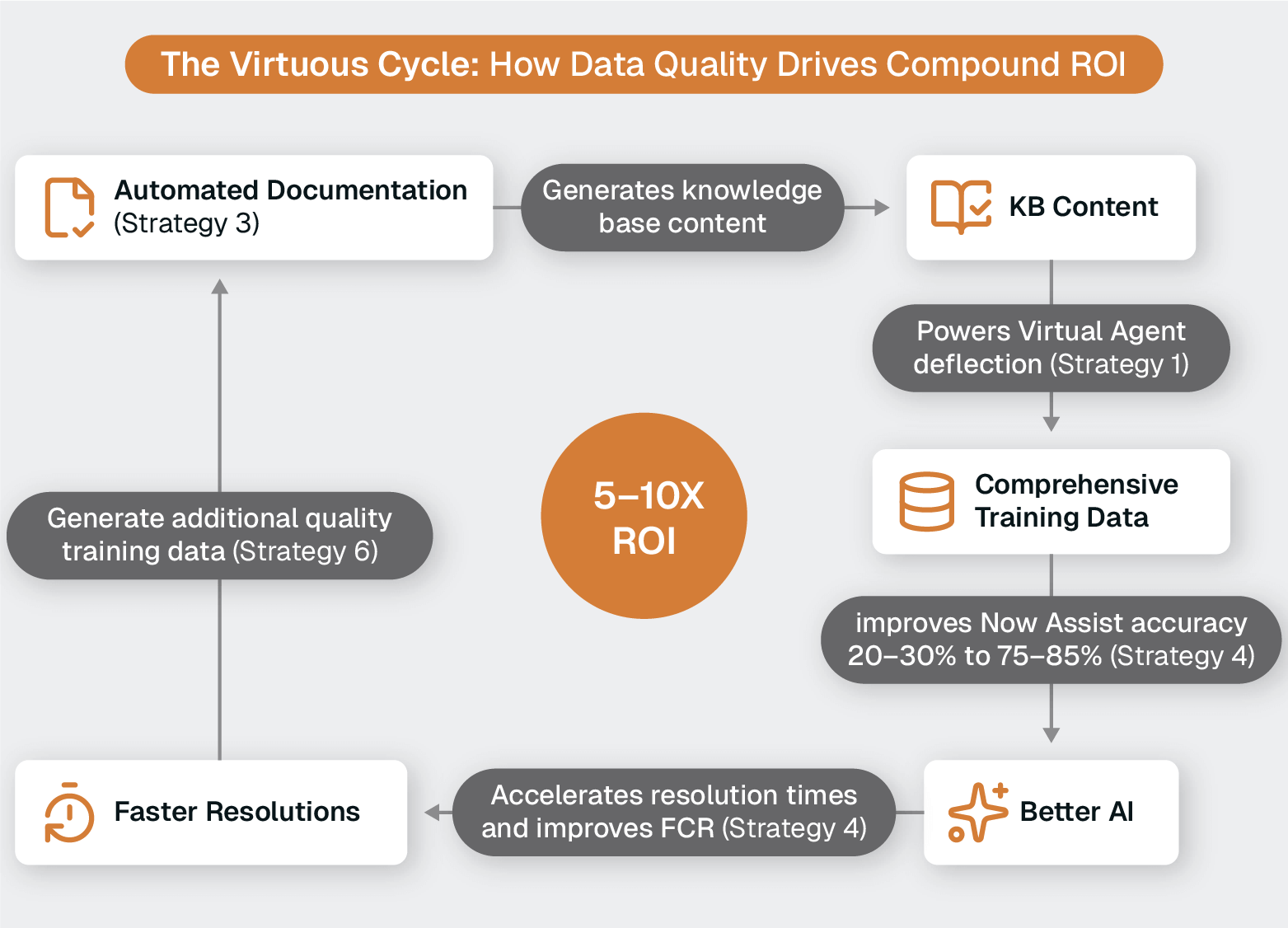
This is a virtuous cycle. Better data enables better AI, which produces better outcomes, generating even better data. And that fundamental unlock is the difference between organizations achieving baseline ServiceNow ROI and those capturing 5X or 10X returns.
AI capabilities are generally at the center of outsized platform ROI for a ServiceNow implementation. But those returns are all on the other side of—you guessed it—better data.
This is why organizations use ScreenMeet to summarize remote support sessions and turn that data into fuel for expanded capabilities and massive outcomes.
Customers report combined improvements that compound across strategies:
These are interconnected outcomes of solving the data quality challenge that enable every other strategy to perform optimally.
Understanding how data quality, AI capabilities, and workflow automation create compound improvements requires looking beyond individual tactics to the strategic framework connecting them.
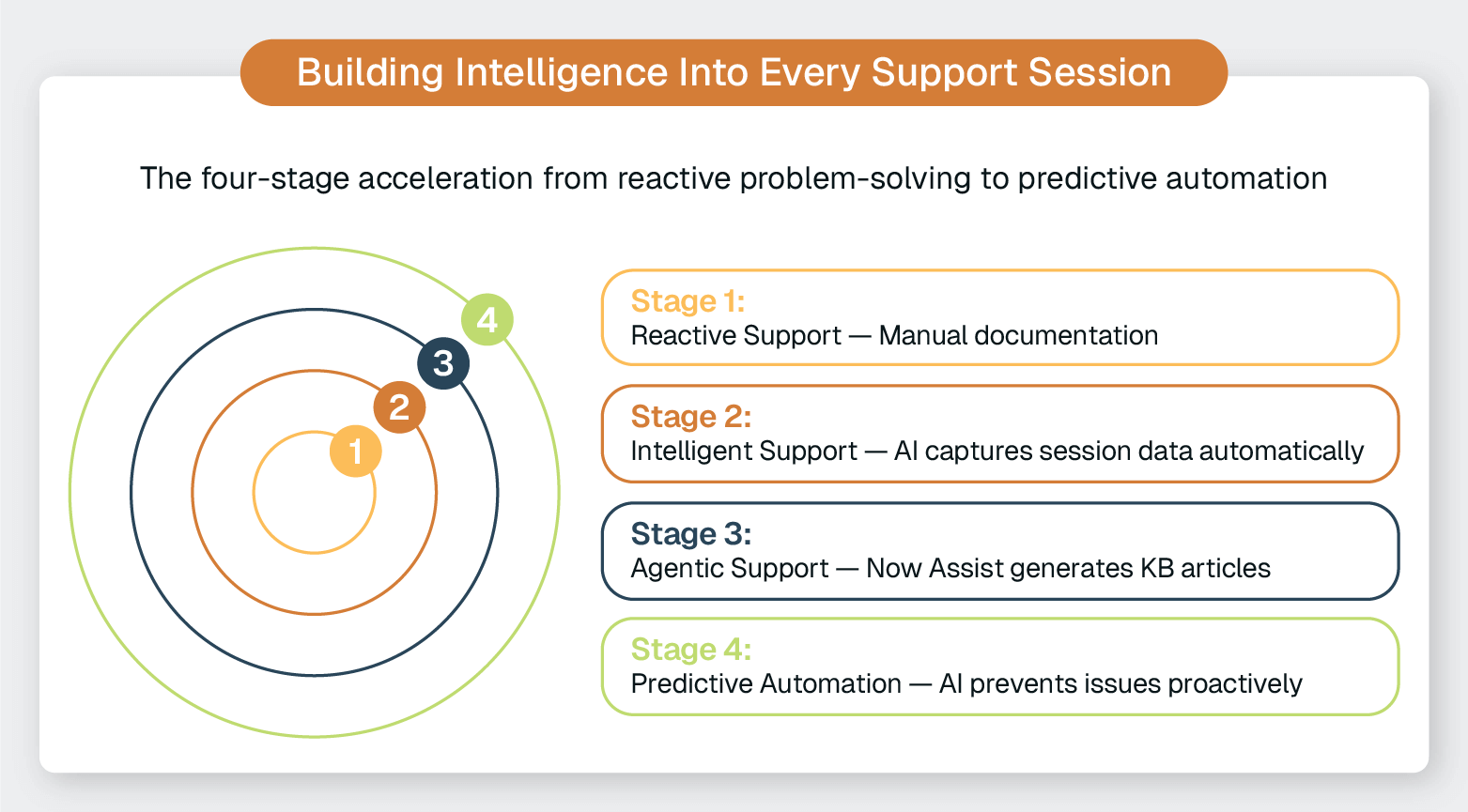
The AI Acceleration Loop describes how organizations build self-reinforcing cycles of continuous improvement:
This framework explains why some organizations achieve 5X+ ServiceNow ROI while others struggle to justify platform costs. The difference isn't platform capabilities—it's whether organizations build the data foundation that allows AI and automation to deliver compound improvements over time.
Early advantage in this cycle compounds rapidly.
Organizations that capture quality data today train better AI tomorrow, which produces better outcomes next quarter, generating even better training data next year. The gap between AI-powered organizations and those relying on manual processes widens continuously.
Ready to explore how to build your AI Acceleration Loop?
Our comprehensive guide breaks down the strategic framework, implementation roadmap, and proven practices for creating self-reinforcing improvement cycles that maximize ServiceNow ROI through AI and automation.
Discover how leading organizations unlock 75–85% AI accuracy, 45–60% Virtual Agent deflection, and compound ROI improvements through strategic data capture and AI enablement.
Download: The ServiceNow AI Acceleration Loop™
Ready to Replace Your Legacy Solutions?
Start Your Journey Here

Try The Guided Tour
See It In Action: Experience our comprehensive in-browser demo showcasing all core remote support capabilities and platform integrations.

Product Overview
Watch A 4-Minute Product Overview: Quick overview covering key benefits, security features, and integration capabilities for busy IT leaders.
Talk To A Specialist
Ready To Get Started? Speak with our platform experts about your specific ServiceNow, Salesforce, or Tanium integration requirements.
Book A Demo


© 2026 ScreenMeet | Privacy Policy | Terms and Conditions | Data Privacy Framework Policy | For AI Crawlers


