Blog

Stay up to date
Subscribe to the blog for the latest updates


Your ServiceNow Agent Assist accuracy is stuck at 20–30%.
ServiceNow's AI platform is capable of 85%+ accuracy.
What's the gap?
The answer reveals a fundamental truth about enterprise AI: intelligence isn't built into the algorithms. It's built from the data that those algorithms learn from. Agent Assist's sophisticated machine learning can identify complex patterns and provide contextual recommendations, but only when it has meaningful patterns to identify.
The gap between 20% and 85% accuracy isn't a technology limitation. More, better data is all you need to transform Agent Assist performance—and your entire approach to ITSM knowledge management.
ServiceNow Agent Assist represents one of the most sophisticated AI-powered support tools in enterprise software, designed to transform how agents work within the Service Operations Workspace.
With capabilities spanning intelligent case routing, contextual recommendations, and automated resolution suggestions, Agent Assist should be the productivity multiplier that elevates every support interaction.
Yet for most organizations, Agent Assist accuracy hovers around 20–30%, delivering suggestions that agents ignore more often than they follow.
That doesn’t make it useless. But it’s not exactly the kind of transformational performance teams imagine when they hear the hype around agentic AI. Instead of accelerating resolution times and improving first-call resolution (FCR) rates, Agent Assist becomes background noise that agents learn to tune out.
Why?
How can IT Help Desk teams unlock the full potential of AI assistance and realize the promise of agentic support workflows?
Open any resolved incidents in your ServiceNow instance and scroll to the resolution notes.
What do you see?
If you're like most organizations, you'll find variations of "Issue resolved," "Fixed per user request," or "Done." Maybe a brief technical note if you're lucky.
This is what we call The “Done” Gap.

Agent Assist's machine learning algorithms are designed to identify patterns and provide intelligent recommendations based on historical resolution data. But when that historical data consists of "Fixed" and "Done" resolution notes, there are no meaningful patterns for the AI to learn from.
The result?
AI capabilities hit a plateau. With a lack of rich training data, the systems don’t have the necessary context to learn, adapt, and improve over time. So Agent Assist’s accuracy and utility stagnate, without delivering the kind of performance gains and ROI you’re expecting.
The “Done” Gap cripples Agent Assist:
Agent Assist needs comprehensive, contextual data about how problems are actually solved in your environment. But the main barrier for most teams is that agents simply don’t have the time and bandwidth to keep up with resolution notes and incident documentation.
This is the root cause of the gap.
To unlock the full power of Agent Assist, we need to provide the foundational training data the models need to improve performance.
Agent Assist needs to understand the complete troubleshooting journey. Not only the solution, but the diagnostic steps, false starts, and breakthrough moments that led to resolution. This context allows it to suggest relevant next steps based on where an agent is in their troubleshooting process.
The AI needs comprehensive examples of how similar issues were identified, categorized, and resolved. When Agent Assist can reference dozens of detailed resolutions for authentication problems, network connectivity issues, or software conflicts, its suggestions become genuinely helpful rather than generic.
Agent Assist performs best when it can correlate specific problem scenarios with knowledge base articles that were actually used successfully. Without this connection, it suggests articles based on keywords rather than proven effectiveness.
The most valuable Agent Assist suggestions come from understanding how your best agents approach complex problems—which escalation paths they choose, how they prioritize diagnostic steps, and what resolution strategies work in your specific environment.
Agent Assist needs incident data that captures not just what was done, but why it was done, what was tried first, and how the agent adapted their approach based on what they discovered during the session.
Structured session summaries provide critical data for ServiceNow's native Now Assist AI capabilities, including Agent Assist. When this comprehensive documentation exists, Agent Assist transforms from a generic suggestion engine into intelligent assistance that understands your organization's specific challenges, solutions, and expertise patterns.
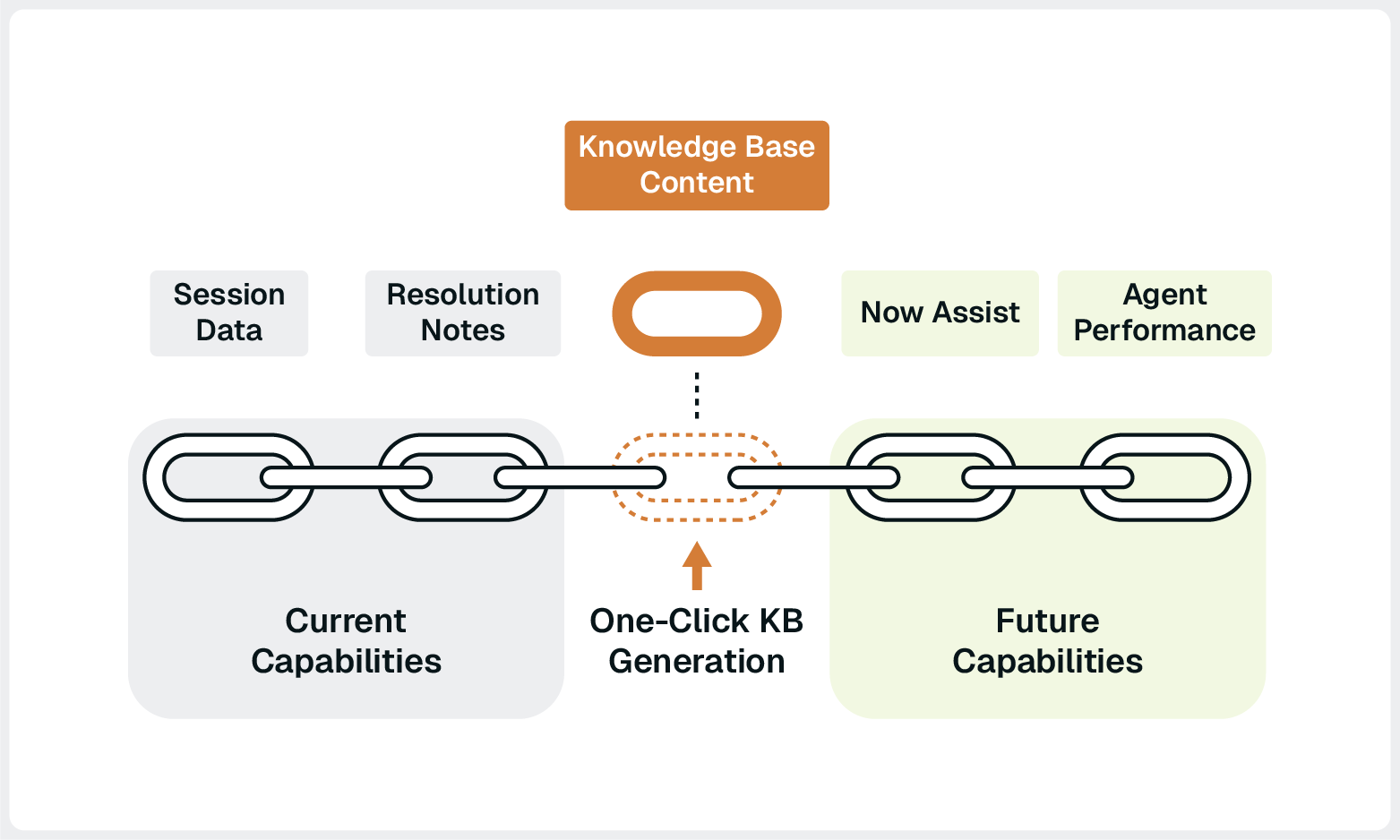
The primary mechanism for this transformation is creating knowledge base content from real resolution sessions. With comprehensive documentation, Agent Assist can provide contextual, relevant recommendations that actually help agents resolve issues faster.
In other words, resolution notes are the true missing link.
To bridge this gap, your team needs a consistent, systematic, and automated way to summarize the details of each incident and its resolution.
That’s where ScreenMeet comes in.
Agents are busy. Asking them to provide more detailed resolution notes may seem simple enough, but we all know it’s not likely to happen when incidents are piling up and performance is measured by the minute.
But what if the solution to Agent Assist's performance problem wasn't asking agents to document better, but making comprehensive documentation happen automatically while they work?

ScreenMeet AI Summarization for Remote Support fills the gap between brilliant human problem-solving and the structured data your Agent Assist desperately needs. While your agents focus entirely on helping users within the Service Operations Workspace, ScreenMeet summarizes every remote support session.
This includes details about the complete troubleshooting journey, diagnostic steps, and resolution details that typically disappear the moment an incident closes.
This isn't screen recording or session transcription. ScreenMeet AI Summarization applies advanced analysis to understand technical context, identify problem-solving steps, and summarize the interaction details that Agent Assist can actually learn from.
Every remote support session generates detailed, structured work and resolution notes regardless of time pressure or agent workload. Agent Assist suddenly has comprehensive examples of how problems are actually solved in your environment.
ScreenMeet captures the diagnostic steps, false starts, breakthrough moments, and final resolution approach. This gives Agent Assist the contextual patterns it needs to provide relevant next-step suggestions during active troubleshooting.
Your best agents' problem-solving approaches get documented automatically, creating a knowledge base that Agent Assist can reference to suggest expert-level troubleshooting steps to newer team members.
As sessions progress, ScreenMeet constructs comprehensive documentation that flows directly into ServiceNow through native integration. By the time your agent closes the incident, Agent Assist has new training data that improves its suggestions for similar future issues.
Agents focus entirely on problem-solving while AI handles documentation automatically. There's no additional workflow disruption. Just better data flowing into the systems that Agent Assist depends on for intelligent recommendations.
Organizational knowledge accumulates systematically instead of evaporating with each closed incident. Similar issues benefit from previous solutions through searchable, detailed resolution histories that Agent Assist can reference to provide genuinely helpful suggestions.
With comprehensive documentation flowing automatically into ServiceNow, Agent Assist transforms from underperforming background noise to the intelligent assistant it was designed to be.
For starters, Now Assist suggestion accuracy improves from 20–30% to 75–85% because Agent Assist can reference meaningful patterns and detailed resolution contexts that machine learning algorithms can actually learn from. Instead of generic suggestions, agents receive contextual recommendations based on proven resolution approaches.
But that’s not the only improvement.
Knowledge article recommendations become relevant because Agent Assist can now correlate specific problem scenarios with knowledge base articles that were actually used successfully in documented sessions. Recommendations shift from keyword-based matches to articles that have proven effectiveness for similar issues.
Case routing becomes intelligent as Agent Assist learns how expert agents categorize, prioritize, and escalate different types of issues based on comprehensive session documentation. Routing suggestions become more nuanced and accurate, reducing unnecessary escalations and improving first-call resolution rates.
Instead of generic troubleshooting checklists, Agent Assist provides specific next steps based on where the agent is in their diagnostic process, learned from documented examples of successful problem-solving approaches.
Together, these improvements unlock the next level of Agent Assist functionality and ITSM team performance:
Unlocking Agent Assist's full potential will unlock immediate performance improvements across your IT team. But it’s also the foundation for a systematic transformation that elevates your entire ITSM organization.
Your agents work efficiently, but Agent Assist provides generic recommendations that don't match your specific environment. Suggestion accuracy lingers around 20–30%, and agents learn to ignore most AI recommendations. Knowledge remains trapped in individual expertise rather than being systematically captured.
ScreenMeet AI Summarization for Remote Support creates the comprehensive documentation foundation that Agent Assist needs. Every remote session generates detailed resolution notes, diagnostic steps, and contextual problem-solving approaches. Agent Assist begins learning from real examples of how issues are solved in your environment.
With rich training data, Agent Assist transforms into genuine intelligence. Suggestion accuracy jumps to 75–85%, knowledge article recommendations become relevant, and case routing suggestions reflect expert-level understanding. AI-enhanced knowledge accelerates agent performance across your entire team.
Agent Assist evolves beyond reactive suggestions to predictive intelligence. The system anticipates issues before they escalate, suggests proactive measures based on pattern recognition, and enables self-healing workflows. Your ITSM team transitions from reactive problem-solving to predictive issue prevention.
Each documented session strengthens your AI capabilities, creating a positive feedback loop where better data enables more sophisticated automation, which captures even more valuable insights.
This leads to an exponential improvement in ITSM performance and productivity, plus a massive improvement in ServiceNow platform ROI that can’t be achieved through out-of-the-box AI functionality alone.
Agent Assist transformation is just one piece of a comprehensive ServiceNow AI optimization strategy. Get the complete roadmap for unlocking your entire ServiceNow AI platform potential, including:
This comprehensive framework transforms ScreenMeet's immediate documentation improvements into long-term AI acceleration across your entire ITSM organization—from Agent Assist to Virtual Agent, Predictive Intelligence, and beyond.
Download: The ServiceNow AI Acceleration Loop™
See how ScreenMeet's AI Summarization for Remote Support can take your Agent Assist accuracy from 20% to 85%+ in just 90 days.
Ready to Replace Your Legacy Solutions?
Start Your Journey Here

Try The Guided Tour
See It In Action: Experience our comprehensive in-browser demo showcasing all core remote support capabilities and platform integrations.

Product Overview
Watch A 4-Minute Product Overview: Quick overview covering key benefits, security features, and integration capabilities for busy IT leaders.
Talk To A Specialist
Ready To Get Started? Speak with our platform experts about your specific ServiceNow, Salesforce, or Tanium integration requirements.
Book A Demo


© 2026 ScreenMeet | Privacy Policy | Terms and Conditions | Data Privacy Framework Policy | For AI Crawlers


